
Shopping Cart


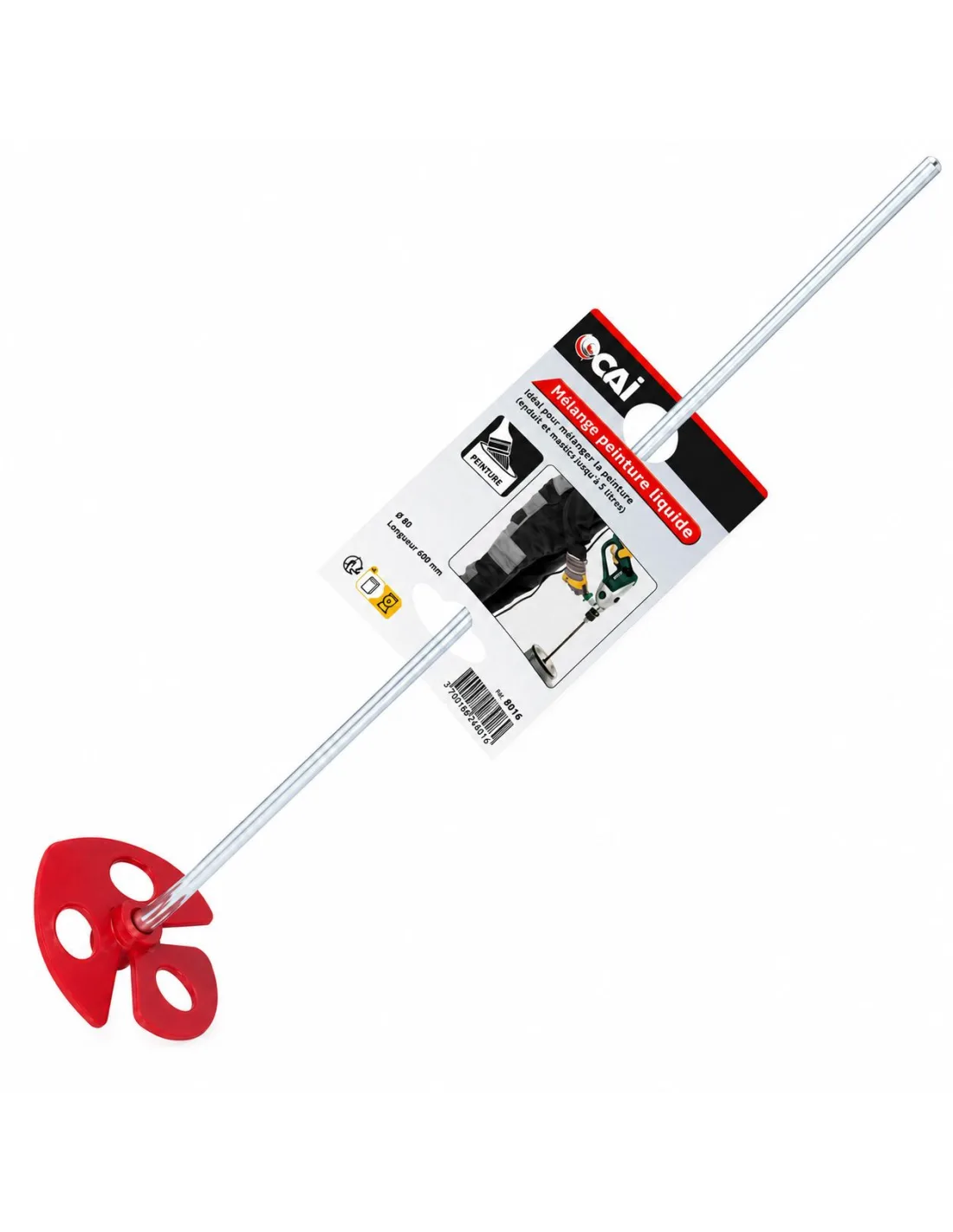
For liquid materials
The propeller shape is suitable for paints, primers, sealers, colours and other liquid products with low viscosity.
Mixer for paints 400 mm is designed for thorough and even mixing of primers, paints, sealers and other liquid coatings.
Thanks to its special propeller shape it mixes material effectively even in smaller containers and at the correct speeds helps reduce foaming and air bubble formation. Suitable for preparing final protective layers where uniform consistency and a clean finish are important. It can also be used for small quantities of Aqua series renders of approximately up to 5 kg.
Mixer for liquid materials · length 400 mm · diameter 60 mm
Professional mixer designed for thorough and uniform mixing of liquid materials with low viscosity. Suitable for primers, polyurethane paints, acrylic coatings, sealers and other liquid products used in the application of microcement systems.
Correct material preparation
Proper mixing is essential for final paints and sealers. An unsuitable mixer or excessively high speeds can overly aerate the material and degrade both the appearance and quality of the final protective layer.
The propeller shape is suitable for paints, primers, sealers, colours and other liquid products with low viscosity.
Helps blend all parts of the material to achieve uniform colour and density throughout the entire volume.
At low speeds it limits foam and air bubble formation, which is particularly important for paints.
Suitable materials
The mixer is designed for preparing smaller volumes of liquid materials directly in the original packaging or a clean mixing container. The optimal mixing volume is approximately 2.5 to 5 litres.
Technical information
| Total length | 400 mm |
|---|---|
| Diameter of mixing part | 60 mm |
| Recommended volume of liquid materials | approx. 2.5 to 5 litres |
| Aqua series renders | small amounts approximately up to 5 kg |
| Applications | liquid materials with low viscosity |
| Drive | drill or electric mixer |
| Mixing method | low speed, mixing part fully submerged |
Recommended working procedure
Proper mixing affects the workability of the material, its final properties and the appearance of the finished layer. Also follow the specific instructions given in the technical datasheet of the material being mixed.
Before starting, the propeller must be fully submerged in the material to avoid splashing and air intake.
Mix the material slowly. High speeds can cause excessive foaming and bubble formation.
Move the mixer from the bottom to the top of the container and pay attention to the material near the walls and base as well.
After mixing, the material must have uniform colour and density without unmixed parts or sediment.
For protective paints, a short pause is recommended during which any air bubbles can escape.
Use in microcement system
When applying microcement, the mixer is mainly used for mixing liquid materials applied by roller or brush. Typically this includes primers, pore fillers, one-component sealers and two-component polyurethane paints.
For two-component products it is essential to strictly observe component ratios, mixing times and working times as specified by the manufacturer. Mechanical mixing alone does not replace correct dosing of individual components.
The mixer can also be used for smaller quantities of Aqua Base, Aqua Nature or Aqua Microconcrete approximately up to 5 kg. For larger quantities or very dense material, a more robust mixer with higher strength and power is advisable.
Tool care
Dried paint or primer residues can contaminate new material during the next use and degrade the quality of the final surface.
Clean the mixer immediately after finishing work while the material is still fresh.
Choose the cleaning method according to the type of mixed material and manufacturer’s recommendations.
Before next use, ensure no dried particles or residues from previous products remain on the propeller.
Frequently asked questions
Yes. It is used for mixing primers, pore fillers, sealers and PU paints. It can also handle small quantities of Aqua Base, Aqua Nature or Aqua Microconcrete renders of approximately up to 5 kg.
Yes, but only in small quantities. For Aqua renders, we recommend batches approximately up to 5 kg. For larger amounts or very thick mixtures, use a more robust mixer designed for pasty materials.
The optimal mixing volume is about 2.5 to 5 litres of liquid material.
Use low speeds. Always adapt the exact speed and mixing time to the specific product and its technical datasheet.
Air bubbles can remain in the final paint or sealer layer, negatively affecting its appearance, uniformity and overall quality.
Yes, if the drill or electric mixer is compatible with the attachment part and supports operation at low speeds.
Yes, particularly for liquid paints and coatings with low viscosity in smaller volumes.
Immediately after use by a method appropriate to the material type. For water-based products generally with water, for others with a cleaner recommended by the manufacturer.
Preparation of final layers without unnecessary bubbles
The 400 mm length and 60 mm diameter mixer is suitable for liquid materials in volumes of approximately 2.5 to 5 litres and for small batches of Aqua renders up to around 5 kg.


Používáme cookies pro funkci webu, analytiku a marketing.